An alarm system is fundamentally an information-gathering network. The central hub is useless without accurate data fed to it by an array of distributed sensors. The strategy of layering these sensors to create a comprehensive security envelope is known as perimeter defense. Understanding the distinct mechanisms of different sensor types allows for efficient deployment, ensuring maximum detection probability while minimizing false alarms.
The Concept of Layered Defense
Security professionals construct defenses in concentric rings. The outer layer focuses on the physical perimeter of the structure (doors, windows, and exterior walls). The inner layer serves as a secondary net, relying on interior spatial detection. If an intruder manages to bypass the perimeter sensors, the interior traps are designed to catch their movement. A robust system balances both layers seamlessly.
Perimeter Sensors: The First Line
Perimeter sensors are designed to trigger an alarm the exact moment an unauthorized entry is attempted, theoretically alerting occupants and authorities before the intruder fully enters the premises.
Magnetic Contact Sensors
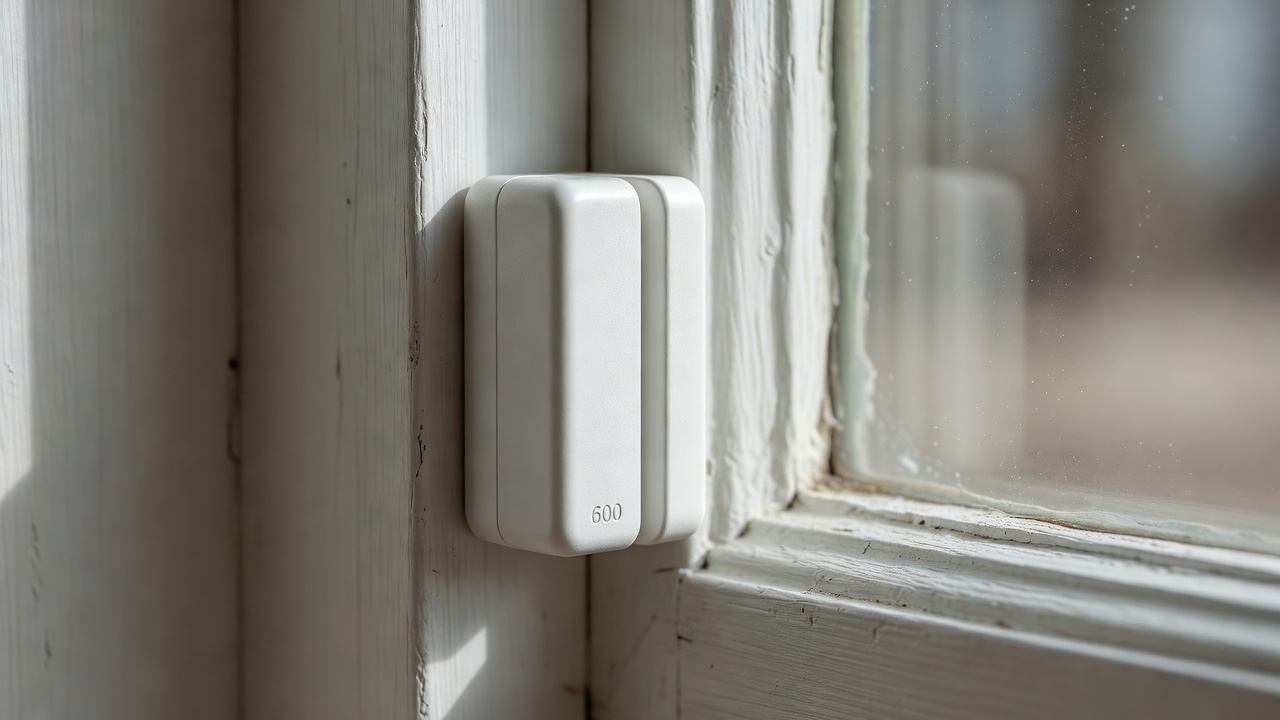
The most ubiquitous component in the security industry is the magnetic contact sensor. These are installed on external doors and accessible windows. They consist of two parts: a reed switch attached to the door frame, and a strong magnet attached to the moving door or window.
When the door is closed, the magnet keeps the electrical circuit within the reed switch closed. If the door opens, moving the magnet away, the circuit breaks. The sensor registers this change in state and signals the control panel. Their simplicity makes them incredibly reliable, battery-efficient (in wireless models), and highly resistant to false alarms.
Glass Break Detectors
Intruders frequently bypass magnetic contacts entirely by smashing the glass of a window or door and climbing through the frame. To counter this, acoustic glass break detectors are deployed.
These devices utilize advanced microphones paired with digital signal processing. They do not trigger on generic loud noises; instead, they are programmed to listen for a specific acoustic sequence: the low-frequency "thump" of glass being struck, immediately followed by the high-frequency "shatter" of breaking panes. A single acoustic detector can cover multiple windows within a room, provided there is a direct line of sight.
Shock and Vibration Sensors
Mounted directly onto window frames, doors, or even walls, shock sensors detect the physical impact of an attempted forced entry. Advanced models allow for sensitivity calibration, distinguishing between the harmless rumble of heavy traffic outside and the sharp impact of a crowbar prying at a door frame.
Interior Sensors: The Secondary Trap
If the perimeter is breached through an unmonitored avenue—such as a hole cut through a roof or an interior wall from an adjoining property—interior sensors serve as the final defensive measure.
Passive Infrared (PIR) Motion Detectors
PIR sensors are the staple of interior detection. They do not emit energy; rather, they "look" for changes in the ambient thermal landscape. The sensor maps the normal temperature profile of an empty room. When an object emitting significant body heat—such as a human—moves rapidly across its field of view, the sudden thermal disparity triggers the alarm.
To reduce false alarms caused by household pets, many PIR detectors utilize "pet immunity" algorithms. They analyze the mass and movement patterns of the heat signature, ignoring bodies under a certain weight threshold (commonly 40 to 80 pounds) that remain close to the floor.
Dual-Technology Motion Detectors
In highly sensitive environments where false alarms are unacceptable, dual-technology sensors are utilized. These units combine two distinct detection methods in one housing—usually a PIR sensor paired with a microwave doppler radar sensor.
For the alarm to trigger, both the infrared thermal shift and the physical microwave movement displacement must be detected simultaneously. This virtually eliminates false alarms caused by localized temperature fluctuations, such as a burst of hot air from a heating vent, which might fool a standalone PIR sensor but would not trigger the microwave radar.
Strategic Deployment
Designing a perimeter defense requires understanding the limitations of the technology. For instance, PIR sensors should not face windows directly, as rapid heating from direct sunlight can cause thermal spikes. Glass break detectors must not be blocked by heavy curtains, which muffle high-frequency acoustic waves. By carefully selecting and positioning the right sensor types, property owners can achieve a highly secure, resilient defensive perimeter.