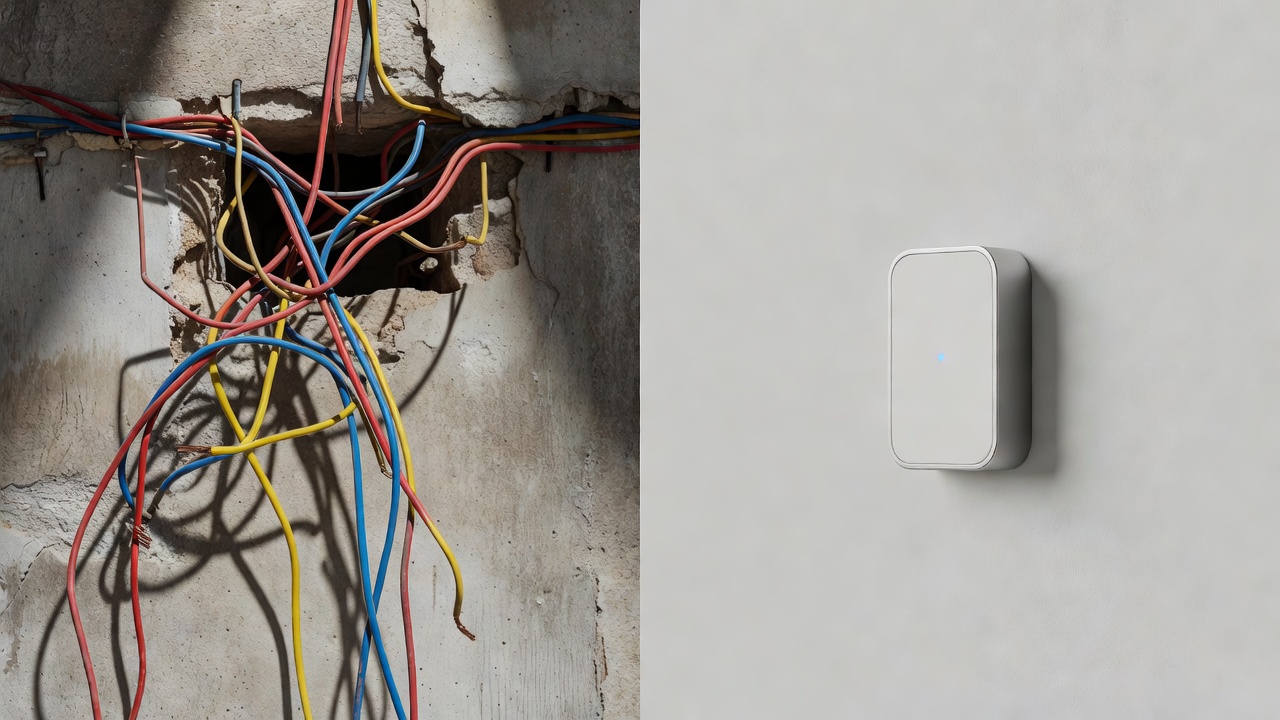
One of the most fundamental decisions when designing or upgrading a security infrastructure is choosing between a wired and a wireless alarm system. Both architectures possess distinct advantages and limitations regarding reliability, installation footprint, scalability, and maintenance. Understanding the structural differences between these two approaches is essential for deploying a system that meets the specific demands of your property.
Wired Alarm Systems
Wired security systems represent the traditional backbone of the alarm industry. In a wired configuration, a physical copper cable connects every single sensor, keypad, and siren directly to a centralized control panel. This panel serves as the central processing unit and power supply for the entire network.
Reliability and Power
The primary advantage of a wired system is unwavering reliability. Because data travels over dedicated physical lines, these systems are entirely immune to radio frequency (RF) interference, wireless jamming attacks, and network range limitations. A wired sensor does not drop its connection because of thick concrete walls or distance from the panel.
Furthermore, wired components draw their operational power directly from the main control panel, which is tied to the building's electrical grid (and backed up by a robust lead-acid battery). This eliminates the need to continuously monitor and replace batteries in individual sensors scattered throughout the property.
Installation Complexity
The significant drawback of wired systems lies in their installation. Running low-voltage cable behind drywall, through attics, under floorboards, and into door frames is a labor-intensive, disruptive, and often expensive process. Because of this, wired systems are highly recommended for new constructions or deep renovations, where cables can be routed before walls are closed.
Wireless Alarm Systems
Wireless alarm systems have surged in popularity, largely driven by advances in low-power radio frequency technology and the rise of smart home ecosystems. In a wireless setup, the sensors communicate with the control panel using secure, encrypted radio signals.
Installation and Flexibility
The most compelling benefit of wireless systems is the ease of installation. Sensors can be mounted using simple adhesives or basic screws in a matter of minutes, completely avoiding the destructive process of routing cables. This makes wireless systems the ideal choice for renters, historical buildings, or existing homes where pulling wire is structurally or financially unfeasible.
Wireless systems also offer unmatched flexibility. If you remodel a room or move to a new property, a wireless system can be easily uninstalled, packed up, and redeployed at the new location.
Maintenance and Signal Integrity
Because wireless sensors are untethered, they rely on localized power sources—typically lithium batteries. Property owners must adhere to a maintenance schedule to replace these batteries, usually every two to five years, depending on sensor traffic and battery size. Failure to maintain batteries will result in blind spots within the security perimeter.
Additionally, while modern wireless protocols utilize robust encryption and frequency-hopping algorithms to prevent interference and hacking, they are still bound by the laws of physics. Extreme distances, thick metal barriers, and dense masonry can degrade signal strength, necessitating the use of wireless repeaters to ensure reliable communication with the hub.
Direct Comparison Table
| Feature | Wired Systems | Wireless Systems |
|---|---|---|
| Installation | Highly invasive; best for new builds. Professional installation usually required. | Non-invasive; fast. Highly suitable for DIY installation. |
| Reliability | Exceptional; immune to RF interference. | Excellent, but susceptible to extreme interference or range limits. |
| Power Source | Central panel supplies power. No sensor batteries needed. | Individual batteries in every sensor requiring periodic replacement. |
| Portability | Permanent; difficult and costly to relocate. | Highly portable; easily moved to new premises. |
| Scalability | Limited by available panel zones and wire routing paths. | Highly scalable; adding new sensors takes minutes. |
Hybrid Systems: The Middle Ground
It is worth noting that the choice is not always strictly binary. Many modern commercial and high-end residential control panels are hybrid systems. They utilize a wired backbone for permanent fixtures like keypads, sirens, and easily accessible door contacts, while incorporating a wireless receiver to support sensors in hard-to-reach areas or outbuildings. A hybrid approach allows property owners to leverage the rock-solid reliability of wired infrastructure where possible, while utilizing wireless tech to fill the gaps efficiently.
Making the Final Decision
The choice between wired and wireless ultimately depends on the nature of your property and your long-term plans. If you are building a custom home or undertaking a major renovation, investing in hardwired security provides a permanent, maintenance-free foundation. Conversely, if you require a rapid deployment, anticipate moving in the near future, or live in a finished home where aesthetics are paramount, a modern wireless system delivers robust security with unmatched convenience.